
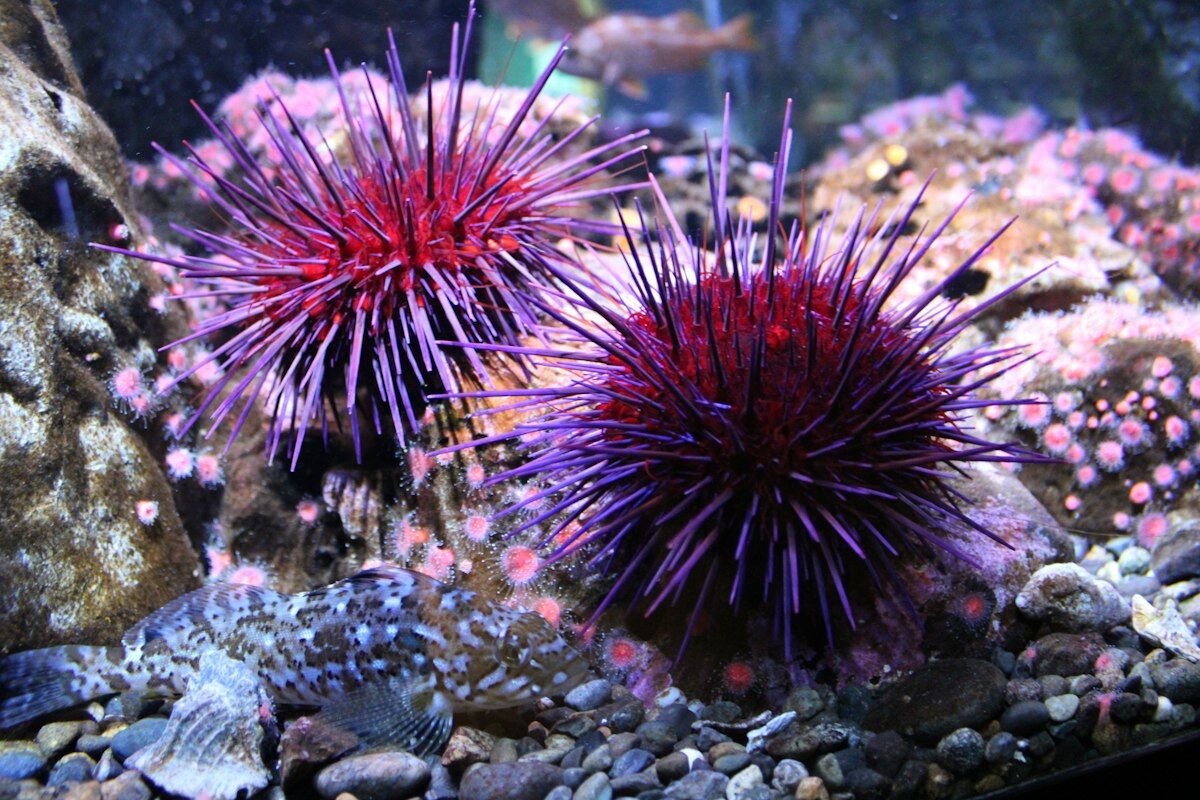
uni /oo·nee/noun · from Japanese 雲丹
- A round sea creature with a spiny shell; a relative of starfish and sea cucumbers (echinoderms).
- Its gonads: a rich, sweet, savory delicacy eaten as sushi, sashimi or over rice.
This volume deals mainly with ②. Picking up ① with bare hands is not recommended.
1The name
In Japanese, uni is written 海胆 (“sea gall”), 海栗 (“sea chestnut”, for its burr-like look) or 雲丹, the last used mostly for uni as food. In English it's a sea urchin, literally a “sea hedgehog”, and these days chefs worldwide simply call the delicacy “uni”.
2Which part do we eat?
The orange or yellow part we eat is the gonad: testes in males, ovaries in females. Urchins are built in five symmetrical parts, like a star, so there are five gonads arranged in a star when you crack one open.
Color varies with species and diet: pale yellow roe is called “white” and deep orange “red” in the trade. Males and females taste much the same, and both are eaten.
3Why is it so delicious?
Uni's flavor comes from a blend of taste compounds. Research shows savory glutamic acid combined with sweet amino acids such as glycine and alanine, while slightly bitter ones such as arginine add depth.
Add the rich fat and silky, melting texture, and you have the balance of sweet, savory, a touch of bitter and richness that makes uni taste like uni.
Because urchins eat seaweed, the quality of their diet is said to shape the flavor. Processing matters too: alum, used to keep the shape, can add bitterness, while alum-free uni kept in salt water tastes purely of itself.
4Why Japan loves uni
In Japan, salted uni from Echizen (Fukui) has been counted among the country's three great delicacies since the Edo period, alongside karasumi (dried mullet roe) from Nagasaki and konowata (salted sea cucumber guts) from Mikawa.
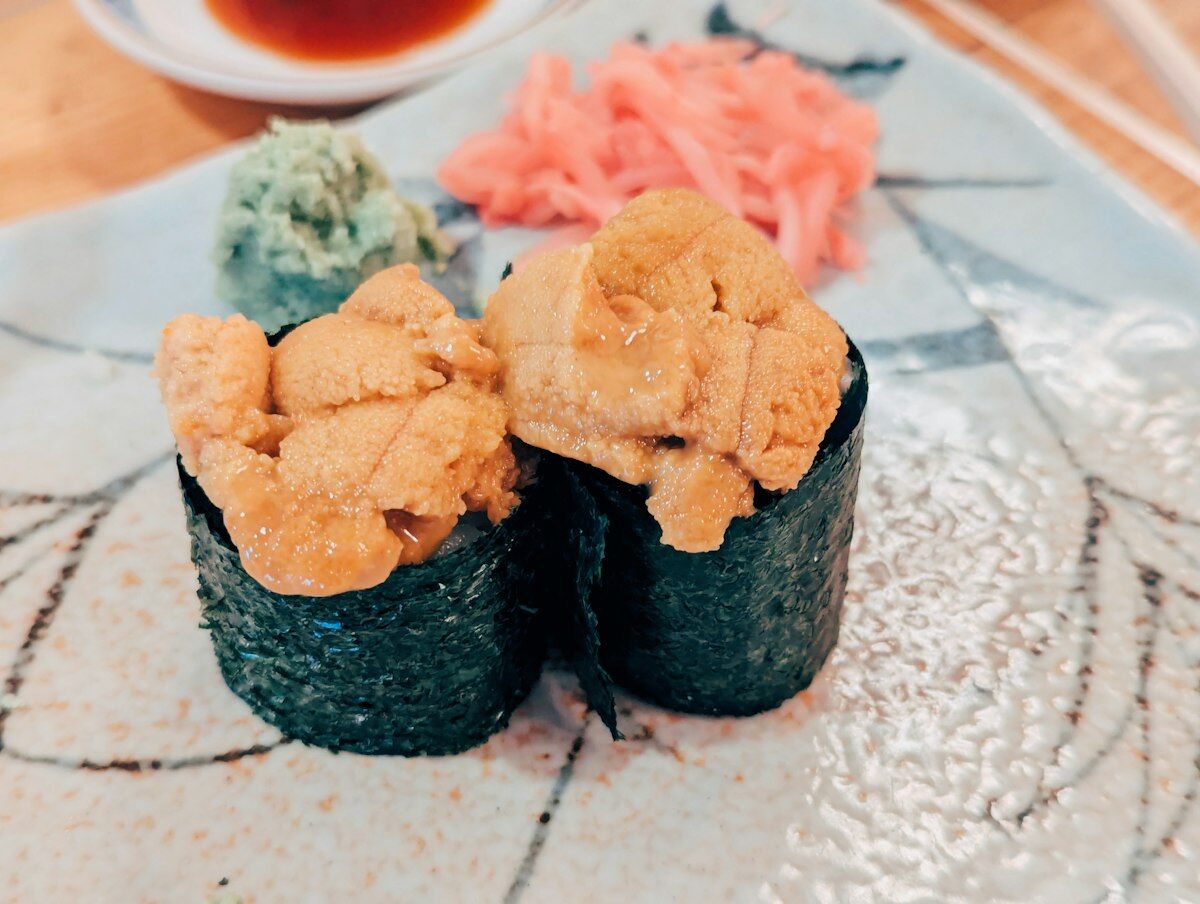
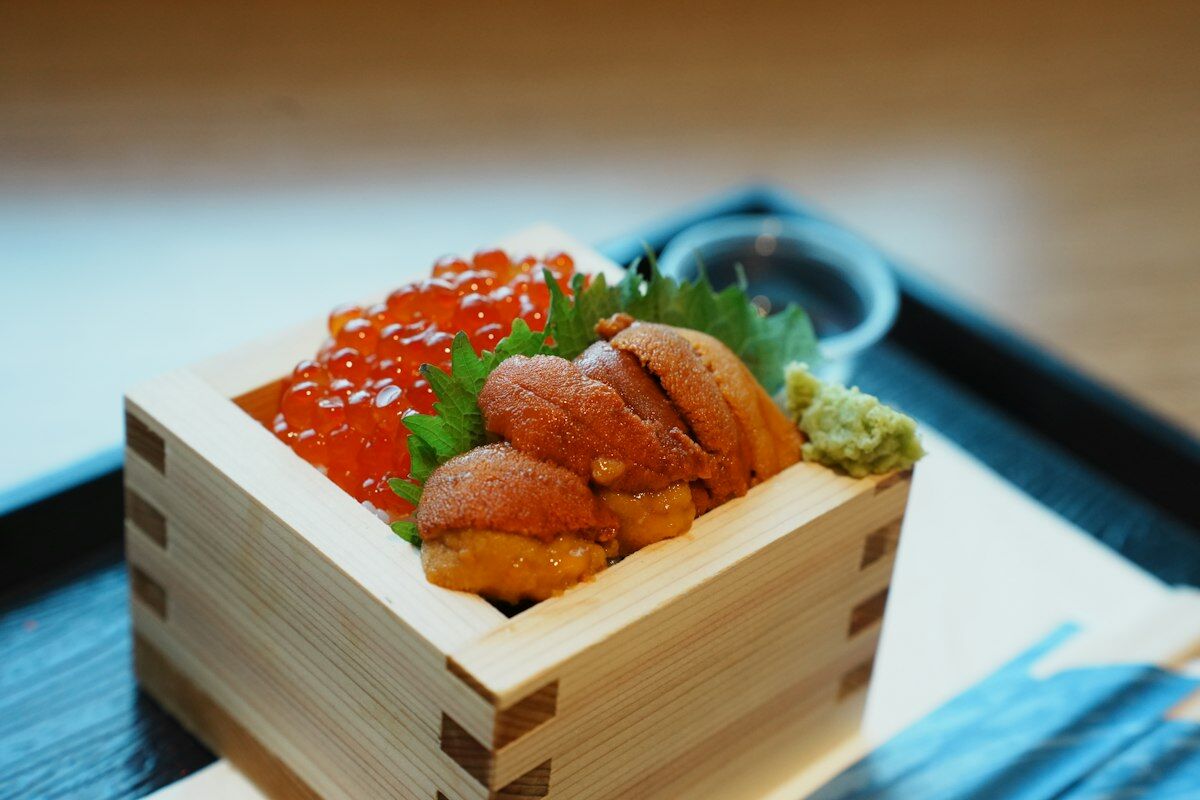
Sushi was another turning point. To serve soft uni as sushi, the gunkan-maki, rice wrapped in a band of nori, is said to have been invented at a Ginza sushi bar in 1941. Later, imports and freezing technology brought uni to conveyor-belt sushi.
Today Japan is said to eat about 90% of the world's uni. Global catch is about 64,000 tonnes a year (2022), roughly half of it from Chile, and much of it heads to Japan, the world's biggest uni fan.
5Uni around the world
Italy
Spaghetti ai ricciIn Puglia and Sicily, uni tossed through pasta, spaghetti ai ricci, is a local classic.
France
Raw from the shellIn Provence, urchins are cracked open in winter and eaten raw with bread and white wine.
Chile
The world's top producerChile catches about half the world's urchins and enjoys them with lemon and herb sauces.
Korea
Uni seaweed soupOn Jeju and elsewhere, seonggye-miyeokguk, uni and seaweed soup, is a favorite.
United States
Santa Barbara uniUni from Santa Barbara, California is a favorite in sushi bars and restaurants.
New Zealand
KinaThe Māori have long eaten urchins, which they call kina.
6Why the world loves it
Sweet, savory and rich in a single bite, unlike any other food.
Each urchin yields only a little, and seasons are short, so it feels special.
As sushi spread, so did the word “uni” and a taste for it.
Its briny aroma and sweetness feel like tasting the sea itself.
7How urchins live
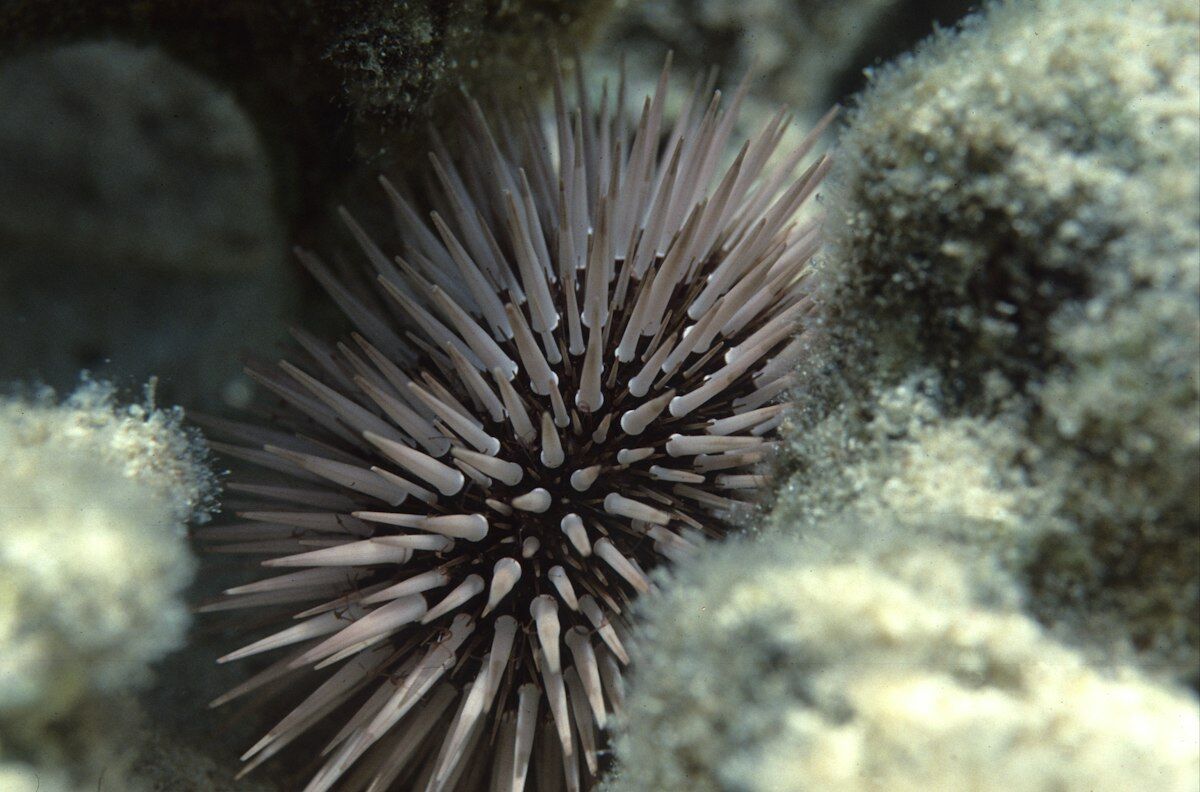
Urchins walk slowly over the seabed on tiny tube feet. The mouth sits underneath, with a five-toothed jaw called Aristotle's lantern that scrapes seaweed off rocks. The name comes from the Greek philosopher Aristotle, who compared its shape to a lantern.
8Tasmanian uni
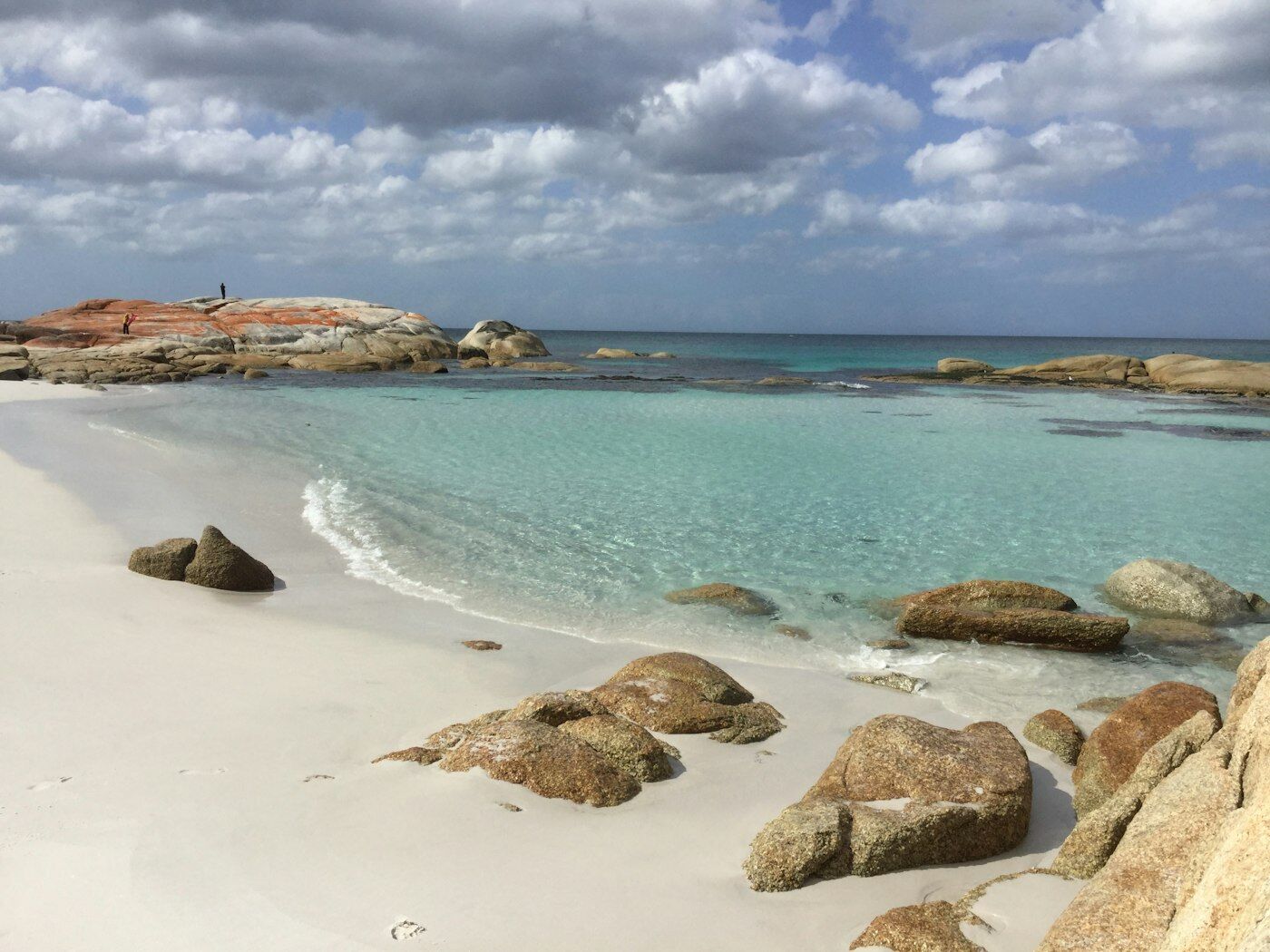
Our Tasmanian uni is gathered by hand by divers in cold water at 40-odd degrees south. Harvesting urchins that have multiplied on the current also helps protect the kelp forests.
9Fun facts
Its spiny look resembles a chestnut in its burr.
Said to have been invented in 1941 so soft uni could be served as sushi.
Uni kept in salt water without alum stays free of bitterness.
Aristotle's lantern scrapes seaweed from rocks.
10The Uni Quiz
Read this far and you're nearly an uni expert.
Q1Which part of the urchin do we eat?
Q2How many gonads does one urchin have?
Q3What is the urchin's jaw called?
Q4Roughly what share of the world's uni is Japan said to eat?
11See also
Edited and published by JCCT Trade Co., Ltd., the leading company in engawa
Photos: Unsplash (Unsplash License).