
Seafood guide

Seafood guide

Origins, flavor and best uses of the seafood we handle. Use it as a reference for menu development and product selection.

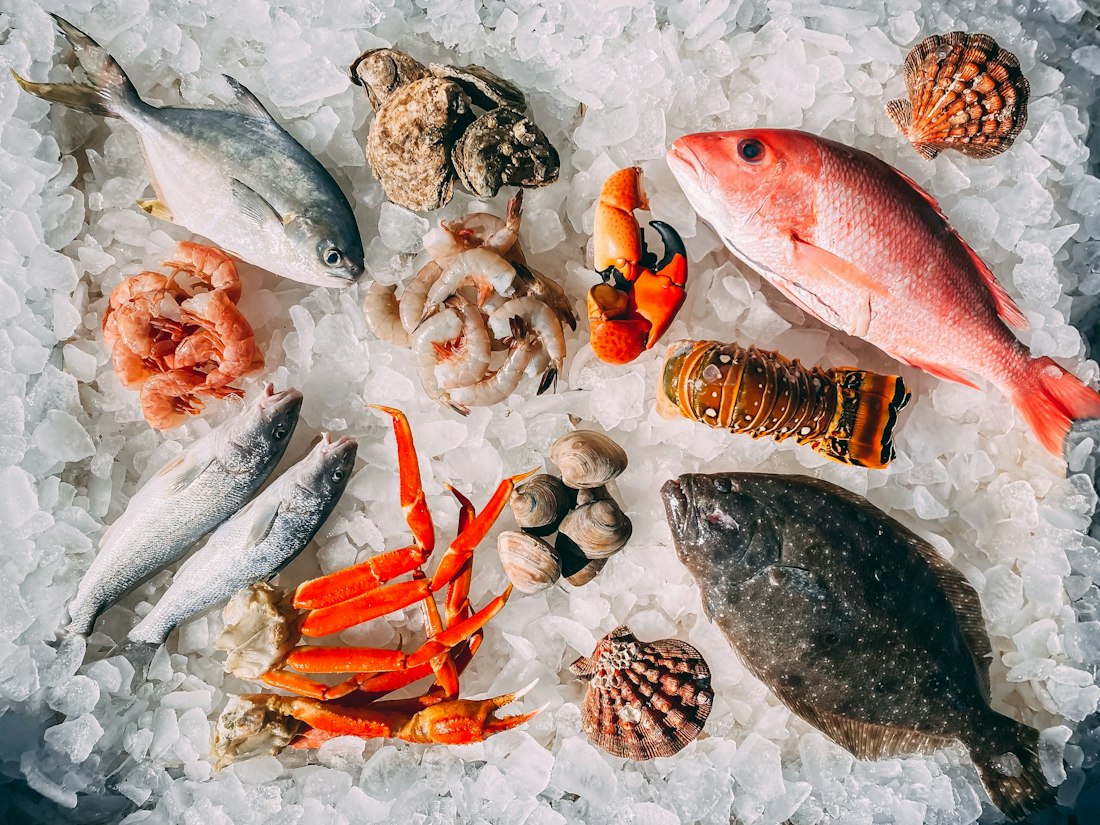
Seafood on ice
Engawa EncyclopediaEngawa EncyclopediaWant to know more about engawa? Visit the Engawa Encyclopedia.→

Flatfish3

Greenland halibut

カラスガレイ · 马舌鲽

Reinhardtius hippoglossoides

One of the main sources of the engawa served at conveyor-belt sushi. Its large size yields thick, fatty engawa. Despite the English name, it is not a true halibut.

Family
Pleuronectidae (righteye flounders)
Habitat & origin
Deep waters of the North Atlantic and North Pacific, mostly several hundred to around 1,000 m down
Flavor
White, soft and rich in fat
Best uses
Engawa for sushi (raw or seared), simmered dishes, fillets

Our productsEngawa slices (4.5–10 g), slices (6–10 g), portions

Kamchatka flounder

アブラガレイ · 箭齿鲽

Atheresthes evermanni

Alongside Greenland halibut, a main source of conveyor-sushi engawa, giving strips with a melt-in-the-mouth richness.

Family
Pleuronectidae (righteye flounders)
Habitat & origin
Cold North Pacific waters such as the Bering Sea and the Sea of Okhotsk
Flavor
As its Japanese name (“oily flounder”) suggests, rich in fat with tender flesh
Best uses
Engawa for sushi and sashimi, simmered dishes, dried fish

Our productsKamchatka flounder engawa

Atlantic halibut

オヒョウ · 大比目鱼

Hippoglossus hippoglossus

One of the largest flatfish, sometimes over 2 m long. Halibut engawa from these big fish is also used as a sushi topping.

Family
Pleuronectidae (righteye flounders)
Habitat & origin
North Atlantic. We source from Greenland, Canada and Norway
Flavor
Lean, mild white flesh with a firm texture
Best uses
Sushi and sashimi, meunière, fried, teriyaki and saikyo-yaki

Our productsFillets and portions, sushi slices (halibut and halibut engawa), teriyaki and saikyo-yaki

Shellfish & urchin2

Scallop

ホタテガイ · 虾夷扇贝

Mizuhopecten yessoensis

What we eat as sushi is the adductor, the muscle that closes the shell. Sashimi-grade adductors are quick-frozen while fresh to keep their sweetness and texture.

Family
Pectinidae (scallops)
Habitat & origin
Cold waters from northern Japan to Sakhalin and northern Korea; widely farmed
Flavor
The adductor's sweetness comes from amino acids such as glycine and alanine
Best uses
Sushi and sashimi, seared, sautéed, fried

Our productsSashimi-grade adductors, slices, seared

Sea urchin (Tasmania)

ウニ · 海胆

Echinoidea

Off Tasmania's east coast, a longspined urchin carried south from mainland Australia by a strengthening current has been stripping kelp reefs bare. Harvesting urchins for their roe helps protect those kelp forests.

Family
Echinoidea (sea urchins)
Habitat & origin
Rocky reefs around Tasmania, Australia, harvested one by one by divers
Flavor
The edible part is the gonad: rich and sweet
Best uses
Sushi (gunkan or nigiri), sashimi, rice bowls

Our productsPurple urchin, bafun urchin

Tuna1

Tuna

マグロ · 金枪鱼

Thunnus spp.

Sashimi-grade tuna is generally kept at ultra-low temperatures of −50°C or below to hold its bright red color and freshness.

Family
Scombridae, genus Thunnus
Habitat & origin
Migrates through temperate and tropical open oceans worldwide
Flavor
Lean red meat is clean-tasting; the belly (toro) is rich in fat
Best uses
Sushi, sashimi, rice bowls, negitoro

Our productsRaw material, loins (semi-finished), slices

Salmon2

Atlantic salmon

アトランティックサーモン · 三文鱼

Salmo salar

In a major seafood company's consumer surveys, salmon has been the most-eaten topping at conveyor-belt sushi for more than ten years running. Because farmed salmon are raised on controlled feed, they became a topping that can be eaten raw.

Family
Salmonidae
Habitat & origin
Farmed mainly in Northern Europe, such as Norway, and in Chile
Flavor
Fatty, soft and melt-in-the-mouth
Best uses
Sushi, sashimi, seared, grilled, processed foods

Our productsFillets, steaks, portions, belly, sushi slices, value-added products

Coho salmon

銀鮭 · 银鲑

Oncorhynchus kisutch

A staple of grilled salmon on Japanese tables. Cutting it to the Japanese kirimi spec keeps every grilled portion the same size.

Family
Salmonidae
Habitat & origin
Native to the North Pacific; widely farmed in Chile
Flavor
Bright red-orange flesh, moderately fatty and mild
Best uses
Salt-grilled portions, bento and set meals, sushi

Our productsSkin-on fillets, kirimi portions, sushi slices

Other fish4

Atlantic mackerel

大西洋サバ · 鲭鱼

Scomber scombrus

Norwegian mackerel is widely used in Japan for salted mackerel and shime-saba. Its rich flesh works well both vinegar-cured and grilled.

Family
Scombridae
Habitat & origin
North Atlantic. Ours come from Norway and Iceland
Flavor
Autumn-caught fish are fatty and tender
Best uses
Vinegar-cured for sushi, salt-grilled, lightly dried, simmered in miso

Our productsFillets, boneless fillets, butterfly cuts, shime-saba sushi slices, teriyaki and saikyo-yaki

Sablefish (black cod)

銀ダラ · 裸盖鱼

Anoplopoma fimbria

Despite the name, it is not a true cod. Its rich flesh is especially good marinated in miso, making it a classic for saikyo-yaki.

Family
Anoplopomatidae
Habitat & origin
The seafloor several hundred metres down, from Hokkaido through the Bering Sea to California
Flavor
Very rich, soft and silky
Best uses
Saikyo miso or sake-lees marinades, teriyaki, simmered

Our productsSkin-on fillets, steaks, sushi slices, teriyaki and saikyo-yaki

Redfish

赤魚 · 平鲉

Sebastes spp.

It grows slowly in cold, deep water and is known for its bright red skin. In Japan it is a familiar fish for simmering and sake-lees marinades.

Family
Genus Sebastes (rockfishes)
Habitat & origin
Deep North Atlantic waters. Ours come from Norway
Flavor
White, moderately fatty, plump flesh
Best uses
Simmered, marinated in sake lees or miso, grilled, sushi

Our productsFillets, sushi slices

Capelin

カラフトシシャモ · 多春鱼

Mallotus villosus

Most of the “shishamo with roe” sold in Japanese supermarkets is actually capelin. True shishamo is a different fish found only along Hokkaido's Pacific coast.

Family
Osmeridae (smelts)
Habitat & origin
Around the North Atlantic and the Arctic. Ours come from Norway
Flavor
Roe-filled females have a pleasant popping texture
Best uses
Grilled whole, fried, nanban-zuke (marinated fried fish)

Our productsFemales (with roe), males

For specs, volumes and pricing, please get in touch.

Contact